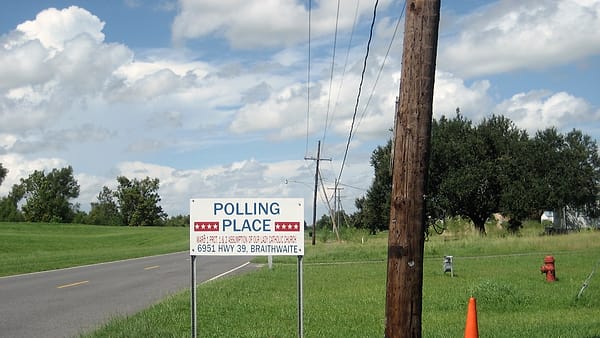
Residence is where someone lives; domicile is the one state the law treats as home, and a great deal turns on the difference. This subject covers what establishes a domicile, what evidence agencies and courts actually weigh, how students, service members and people with two homes are treated, and why voter registration, a driver's license and an address of record are read as declarations rather than conveniences.
Federal law protects a service member from acquiring or losing a domicile solely because of military orders, and shields their pay and personal property from taxation by a state where they are present only under orders. Comparable protection extends to a military spouse, together with an election allowing a spouse to adopt the service member's state of legal residence for tax and voting purposes.
Students occupy the hardest position in domicile analysis because two presumptions run against them simultaneously. The first treats presence for education as presence for a temporary purpose, so time at university does not build a domicile on its own. The second attributes a dependent student the domicile of the parent who supports them, wherever the student physically lives.
Voter registration carries disproportionate weight in domicile determinations because of what it is: a formal statement, made by the individual to a government body, about where they belong, recorded with a date and generally available publicly. Eligibility to register is itself defined by residence, so registering is an assertion that the residence requirement is satisfied.
A domicile continues until it is replaced. Because every determination that depends on domicile requires an answer, the law does not permit a gap, so a person who leaves a state without settling anywhere else remains domiciled where they started. Travel, temporary assignments, extended stays abroad and periods of genuine indecision all leave the former state in place, and it continues to claim the person for tax, jurisdiction and estate purposes.
Jury service is tied to residence in the county or district that issued the summons, so a person who has genuinely moved is not qualified and should say so. The response is administrative — a short written statement on the form or by letter, with evidence of the new address — and it is not optional: an unanswered summons can produce a show-cause order or a fine, enforced against someone who is no longer there.
Contested domicile determinations are decided on documents, and the documents fall into a consistent hierarchy. At the top sit formal declarations to government bodies and acts involving real expense or the surrender of something: a driver's license exchanged, a vehicle registered, a resident tax return filed, a voter registration moved, a home purchased. In the middle sit the ordinary traces of living somewhere.
A person may own or rent homes in several states without difficulty; the law simply insists that one of them is the domicile. Where the split is genuine, the analysis looks for the center of the person's life: the larger and more permanent home, where the household goods and family are, where professional and social connections sit, and where the formal records point.
Several states provide for a sworn declaration of domicile, filed with a county office and recorded. The document states that the signer is a resident of the county and intends it to be their permanent home, and it becomes a dated public record. Its value is corroborative: it fixes a date, it demonstrates deliberateness, and it is inexpensive.
The address a person gives to an agency, court, board or program does two jobs. It records where they say they belong, which is why it appears in domicile determinations, residency reviews and jurisdictional arguments. And it fixes where notice is effective, so a document sent there is generally treated as received whether or not the person saw it.
Residence describes physical presence in a place with some degree of permanence, and a person may have several at once. Domicile is the single state the law treats as a person's home, established by presence plus an intention to remain indefinitely, and retained until a new one is acquired. Diversity jurisdiction, taxation as a resident, probate of movable property, custody jurisdiction, tuition classification, voting and jury service each turn wholly or partly on domicile.
A domicile of choice is acquired when a person is physically present in a state and simultaneously intends to remain there indefinitely. Neither element alone is sufficient: presence without intention leaves the old domicile intact, and intention without arrival does nothing. The change can occur on the first day, and no minimum period is required, which surprises people who assume domicile is earned by duration.