
Skip to content
Right Way

      Subjects

      This library

      Right Way Review — American law when more than one state is involved

      Ten subjects, three questions

      All subjects
      Subject The ruleWhat to doThe judgment
      State Law & Immigration Status What a State Non-Cooperation Statute Actually LimitsRecovering From an Unauthorized PreparerWhich States Issue a License Without Lawful Presence
      Residence & Domicile Service Members and the State They Never LeftAnswering a Summons From a State That No Longer Claims YouThe Ballot as Evidence of Domicile
      Custody & Support Across States Direct Income Withholding Sent to Another StateRegistering a Custody Order in a Second StateWhen Two States Both Claim Authority
      Working in Two States Which State's Leave Fund a Cross-Border Worker Pays IntoWhen an Employer Must Register in a Second StateWhere the Work Is Performed and Why It Decides
      License Portability & Compacts How an Interstate Licensure Compact WorksRenewing a License You No Longer UseWithdrawing From a Compact and What Happens to Privileges
      Which State's Law Applies What a Choice-of-Law Clause AchievesProving Another State's Law in CourtWhen a Court Sets the Chosen Law Aside
      Being Sued in Another State What Appointing a Registered Agent ConcedesAppearing to Object Without SubmittingGeneral and Specific Jurisdiction Compared
      Estates in Two States A Will Valid Where It Was SignedSmall-Estate Routes That Avoid a Second CaseCommunity Property Brought Into a Common Law State
      Tax Residency & Nexus Economic Nexus and the Threshold a Business CrossesThe Records an Auditor Asks ForPart-Year and Non-Resident Returns Compared
      Federal or State Court Supplemental Jurisdiction Over State ClaimsThe Removal Deadline and What Starts ItTwo Courts Hearing Related Cases
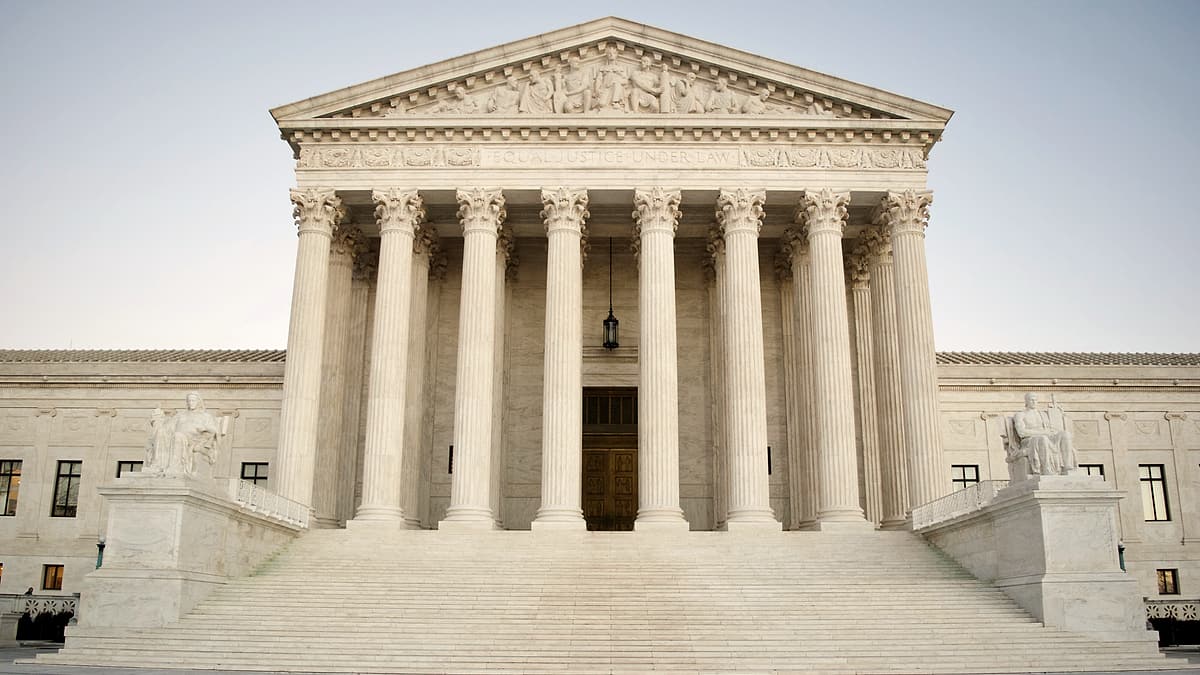
      The Front facade of the Supreme Court of the United States [#sky ,#travel ,#tourism ,#architecture ,#building ,#monument
      State Law & Immigration Status

      Emergency Medical Coverage Regardless of Status

      Two separate federal rules operate here and they are constantly confused. One obliges a hospital to examine and stabilize anybody who arrives. The other pays for the treatment. Both work without regard to immigration status, and neither covers what happens next.

      7 min readFederal and state

      Also filed

      All crossings
      Being Sued in Another State

      A Default Judgment Entered in Another State

      Full faith and credit requires each state to give a sister-state judgment the effect it has where rendered, which is enforced through a registration procedure adopted in most states rather than by fresh litigation. A judgment debtor cannot reopen the merits, cannot argue that the rendering state applied the wrong law and cannot invoke public policy.


      7 min readAcross state lines

      Custody & Support Across States

      Modifying Support After Both Parents Move

      A state other than the issuing state may modify a child support order only where two conditions are met. Nobody — neither parent nor the child — may still reside in the issuing state, and the party seeking modification must be a non-resident of the state being asked to act, with the respondent subject to that state's personal jurisdiction. The effect is that a parent seeking a change files where the other parent lives.

      7 min readAcross state lines

      Federal or State Court

      Diversity of Citizenship Explained

      Diversity jurisdiction allows a federal court to hear a claim arising under state law where the parties are citizens of different states and the amount in controversy exceeds the statutory threshold. Diversity must be complete: no plaintiff may share citizenship with any defendant. Citizenship for an individual means domicile; for a corporation it means both the state of incorporation and the state of its principal place of business.

      7 min readFederal law

      Residence & Domicile

      Where a Student Is Domiciled

      Students occupy the hardest position in domicile analysis because two presumptions run against them simultaneously. The first treats presence for education as presence for a temporary purpose, so time at university does not build a domicile on its own. The second attributes a dependent student the domicile of the parent who supports them, wherever the student physically lives.

      7 min readState law

      State Law & Immigration Status

      What a person's immigration status changes about state-level rights, and what state law cannot reach.

      All articles

      How a State Disposition Reads to a Federal Adjudicator

      A state court decides a state case using state vocabulary. A federal adjudicator later reads that record through federal definitions that the state judge never had in mind, and the words that mattered locally are frequently not the words that matter now.

      7 min readFederal and state

      Residence & Domicile

      How a person changes which state they legally belong to, and what proves it.

      All articles
      Residence & Domicile

      Abandoning a Domicile Without Establishing Another

      A domicile continues until it is replaced. Because every determination that depends on domicile requires an answer, the law does not permit a gap, so a person who leaves a state without settling anywhere else remains domiciled where they started. Travel, temporary assignments, extended stays abroad and periods of genuine indecision all leave the former state in place, and it continues to claim the person for tax, jurisdiction and estate purposes.

      7 min readState law

      Residence & Domicile

      The Evidence Agencies Weigh Most

      Contested domicile determinations are decided on documents, and the documents fall into a consistent hierarchy. At the top sit formal declarations to government bodies and acts involving real expense or the surrender of something: a driver's license exchanged, a vehicle registered, a resident tax return filed, a voter registration moved, a home purchased. In the middle sit the ordinary traces of living somewhere.

      7 min readState law

      Residence & Domicile

      Keeping Two Homes Without Keeping Two Domiciles

      A person may own or rent homes in several states without difficulty; the law simply insists that one of them is the domicile. Where the split is genuine, the analysis looks for the center of the person's life: the larger and more permanent home, where the household goods and family are, where professional and social connections sit, and where the formal records point.

      7 min readState law

      Custody & Support Across States

      Which state decides a child's custody and support once a family is split between two.

      All articles
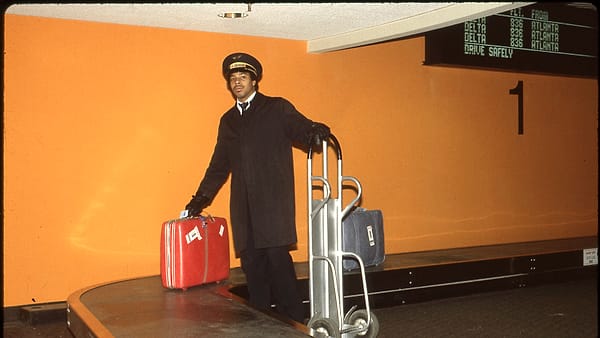
      An unidentified airport employee, a Skycap porter, is seen by a baggage carousel
      The move that has to be announced before it happens.

      Working in Two States

      Which state's employment law reaches a worker who lives in one state and works in another.

      All articles

      Daily Overtime Against Weekly Overtime

      The same forty-hour week can produce no overtime or eight hours of it, depending entirely on which state the work happened in. Two systems run in parallel, and where both apply the employee gets whichever produces more. Payroll rarely notices the difference.

      6 min readAcross state lines

      License Portability & Compacts

      How a professional license earned in one state is used, recognized or refused in another.

      All articles
      License Portability & Compacts

      Military Spouse Licensing Provisions

      Military spouses face a structural problem: relocations every few years, each requiring a new state license under ordinary rules. Federal law now provides for portability of certain licenses for spouses relocating on orders, and nearly every state has enacted its own provision — expedited endorsement, a temporary permit while an application is processed, or in a growing number of states recognition of a current out-of-state license without a new application.

      7 min readFederal and state

      License Portability & Compacts

      What a Board Requires of an Applicant From Elsewhere

      A board considering an applicant licensed elsewhere asks for identity and eligibility documents, primary source verification of education, examination and every license ever held, evidence of recent practice, continuing education records, a criminal background check, and disclosures covering discipline, malpractice, impairment and criminal history. Most of the elapsed time is spent waiting on third parties, and most of the difficulty comes from the disclosures rather than the credentials.

      7 min readState law

      License Portability & Compacts

      Treating a Patient Who Is in Another State

      Nearly every state takes the position that a practitioner treating a patient located in the state is practicing in that state and requires a license or a recognized privilege there. The practitioner's own location is irrelevant. Exceptions exist and are narrow: consultation with a treating practitioner rather than with the patient, follow-up for an established patient temporarily out of state in some jurisdictions, emergencies, and specific telehealth registration schemes.

      7 min readAcross state lines

      Which State's Law Applies

      The rules a court uses to choose between two states' laws once both could govern.

      All articles
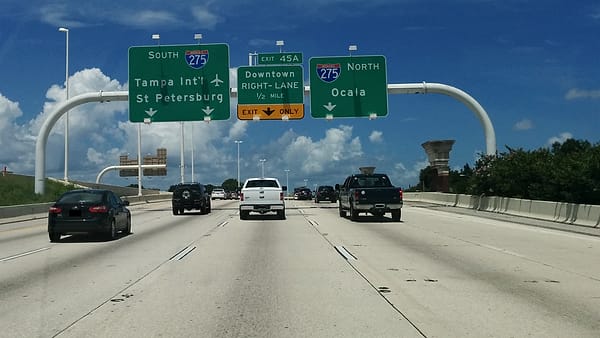
      Westbound Interstate 4 approaching the interchange with Interstate 275, where the carriageway divides
      One dispute, two answers, both correct.

      Being Sued in Another State

      When a court in a state a person has never lived in may nonetheless decide their case.

      All articles

      The Contacts a Court Looks For

      The constitutional test has three parts and the first does most of the work. A defendant must have reached into the state deliberately, and the claim must come out of that reaching rather than merely coexist with it in the same period.

      7 min readAcross state lines

      Estates in Two States

      What happens to an estate when the property, the will and the executor are not all in one state.

      All articles
      Estates in Two States

      When Ancillary Administration Is Required

      The domiciliary administration of an estate takes place where the decedent was domiciled and governs personal property wherever located. Real property is governed by the law of the state where it sits, and transferring title generally requires a proceeding there. Ancillary administration is that second proceeding: shorter and confined to the local assets, but a separate case with its own filings and its own fiduciary appointment.

      7 min readAcross state lines

      Estates in Two States

      Bonds and Local Agents Required of a Foreign Fiduciary

      A personal representative or trustee acting in a state other than their own is frequently required to post a fiduciary bond and to appoint a resident agent for service of process. The bond is an insurance instrument protecting beneficiaries and creditors against loss, priced on the value of the assets and the fiduciary's credit. Wills commonly waive bond, and some states honor the waiver while others require a bond from a non-resident regardless.

      7 min readState law

      Estates in Two States

      What a State Demands of an Out-of-State Executor

      States differ on whether a non-resident may serve as personal representative. Most permit it, some require the appointment of a resident agent for service of process, some require a bond that a resident would not have to post, and a small number restrict non-resident appointments to relatives of the decedent or require a resident co-representative.

      7 min readState law

      Tax Residency & Nexus

      What makes a person a resident of a state for tax, and what makes a business answerable to one.

      All articles
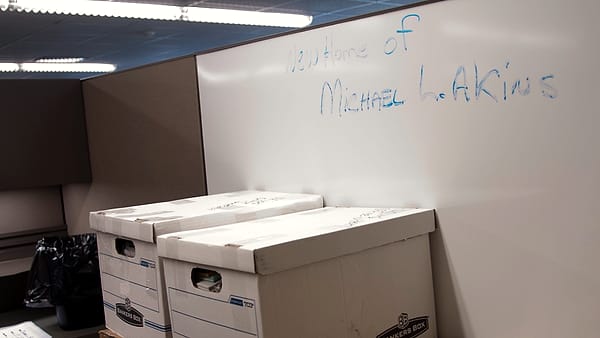
      Boxes of files wait for Michael Akins to arrive at his new work station in the Old Bowley School on Fort Bragg, N.C., Monday
      The evidence is how someone actually lives.

      Federal or State Court

      Which courthouse a case belongs in when the parties come from different states.

      All articles

      The Forum Defendant Rule

      Diversity jurisdiction exists to protect out-of-state parties from local bias. A defendant sued at home does not need that protection, so it cannot remove — and the wording of that rule has produced an argument of its own.

      6 min readFederal law